
There are good reasons to take a tree out: it is dead, it is splitting, it is leaning toward the house after a storm, its roots are lifting the pool deck or pushing on the foundation, or it was planted forty years ago in a spot that only made sense when it was small. Whatever the reason, the job is the same. Get it down without touching the roof, the wall, the pool or the neighbor's property, and leave the yard ready for whatever goes in next.
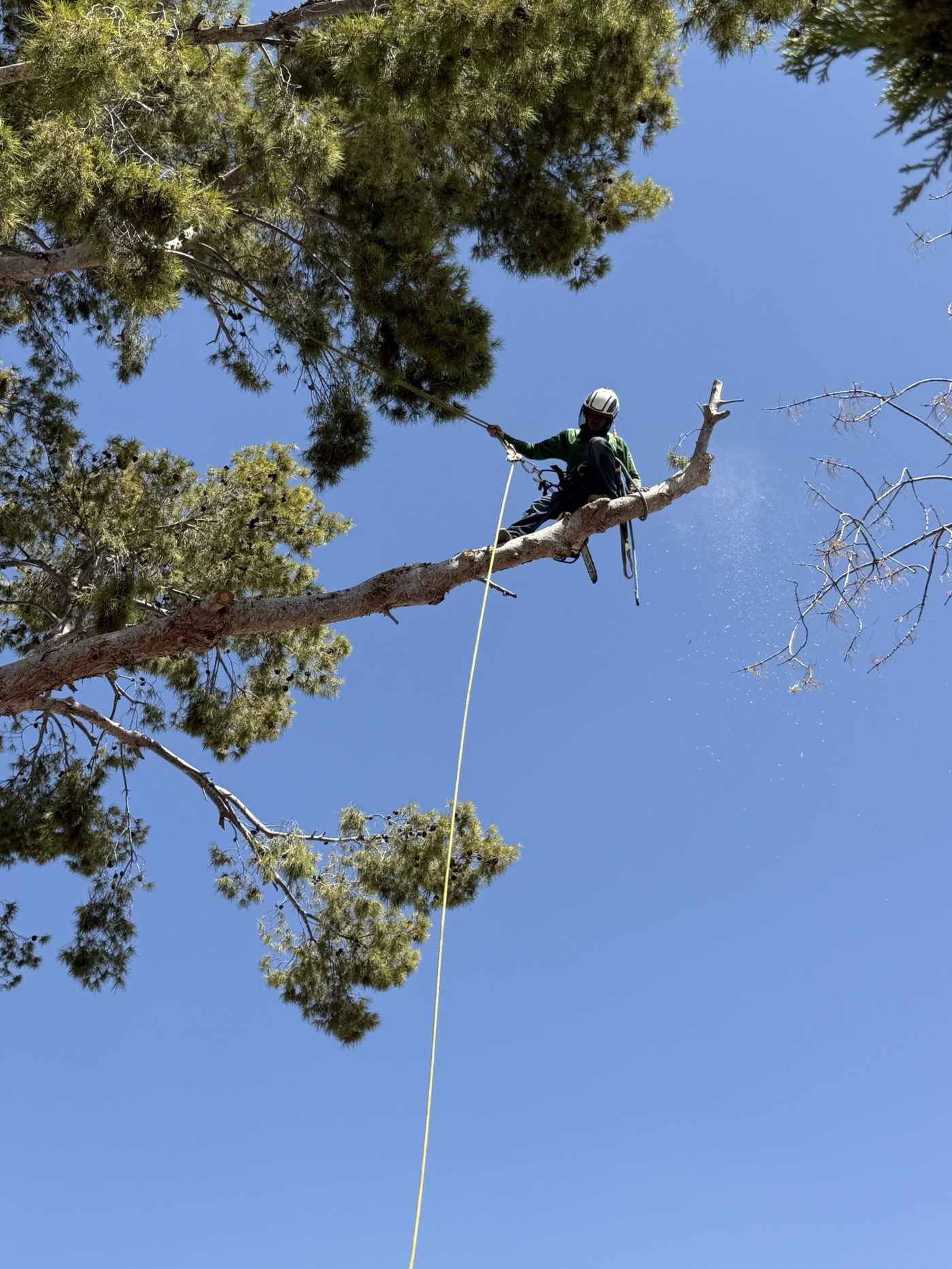
In a Phoenix backyard there is rarely room to drop a tree whole. Our climbers go up, take the canopy apart from the top, and lower each section on ropes to the ground crew. A big ficus over a foundation or a eucalyptus leaning over a neighbor's pool comes down one controlled piece at a time. Then the trunk is bucked into rounds, everything is chipped or hauled, and the stump is ground if you want it gone.
How a removal goes
- Jason looks at it. He walks the property with you, checks what the tree is near, what is under it and where the truck and chipper can get to, and gives you a firm price. Usually the same day you call.
- The crew sets up. Ropes, rigging and drop zones are planned before the first cut. Anything fragile nearby gets protected or moved.
- The tree comes down in sections. A climber works from the top, and each limb and trunk section is lowered under control to the ground crew. Nothing free-falls near a structure.
- Cleanup and haul. Brush is chipped, wood is hauled, sawdust is raked, rock and gravel go back where they were. If you want firewood or a slab saved, say so and we will set it aside.
- Stump, optional. Most people want the stump ground below grade so they can put rock, turf or a new tree in the spot. See stump grinding.
Trees we remove most
- Ficus. The classic Phoenix problem tree: planted close to the house for shade, now lifting the slab and hanging over the roof. Removed in sections, roots addressed at the stump.
- Eucalyptus and Aleppo pine. Tall, heavy and fond of dropping limbs in monsoon winds. Climbed and rigged down.
- Mesquite and palo verde. Usually removed after a storm lays them over, or when the roots start heaving a wall or pool deck.
- Dead or dying trees. Sissoo, ash, mulberry and pines that have given up in the heat. Dead wood is brittle and unpredictable, which is exactly why you want a climber who does this every week.
- Palms. Overgrown fan palms and date palms taken down in sections, trunk and all. See palm trimming and removal.
What tree removal costs in Phoenix
The price comes down to size, access and what the tree is near. A small ornamental in an open front yard is a short job. A sixty-foot eucalyptus wedged between a pool and a block wall is a full crew day of careful rigging. Things that move the number:
- Height and trunk diameter
- How close it is to the house, pool, walls, fences and power lines
- Whether the crew can get the chipper and truck near the tree or has to carry everything out
- Whether you want the stump ground and the wood hauled
You get one firm number before any work starts. It does not change unless you change the job. We are licensed and insured, and we will send the paperwork before the crew arrives if you ask.
Permits and HOAs
Phoenix and the surrounding cities do not usually require a permit to remove a tree on your own residential property. Two exceptions come up: some HOAs want notice or approval before a tree in a front yard or common-view area comes out, and certain native plants such as saguaros have state rules about removal and salvage. If your job is one of those, we will tell you before the estimate is final.


